This Was Supposed to Be an Interview
Chef Rhea Rizzo on memory, Asia, and what happens when the questions can wait.
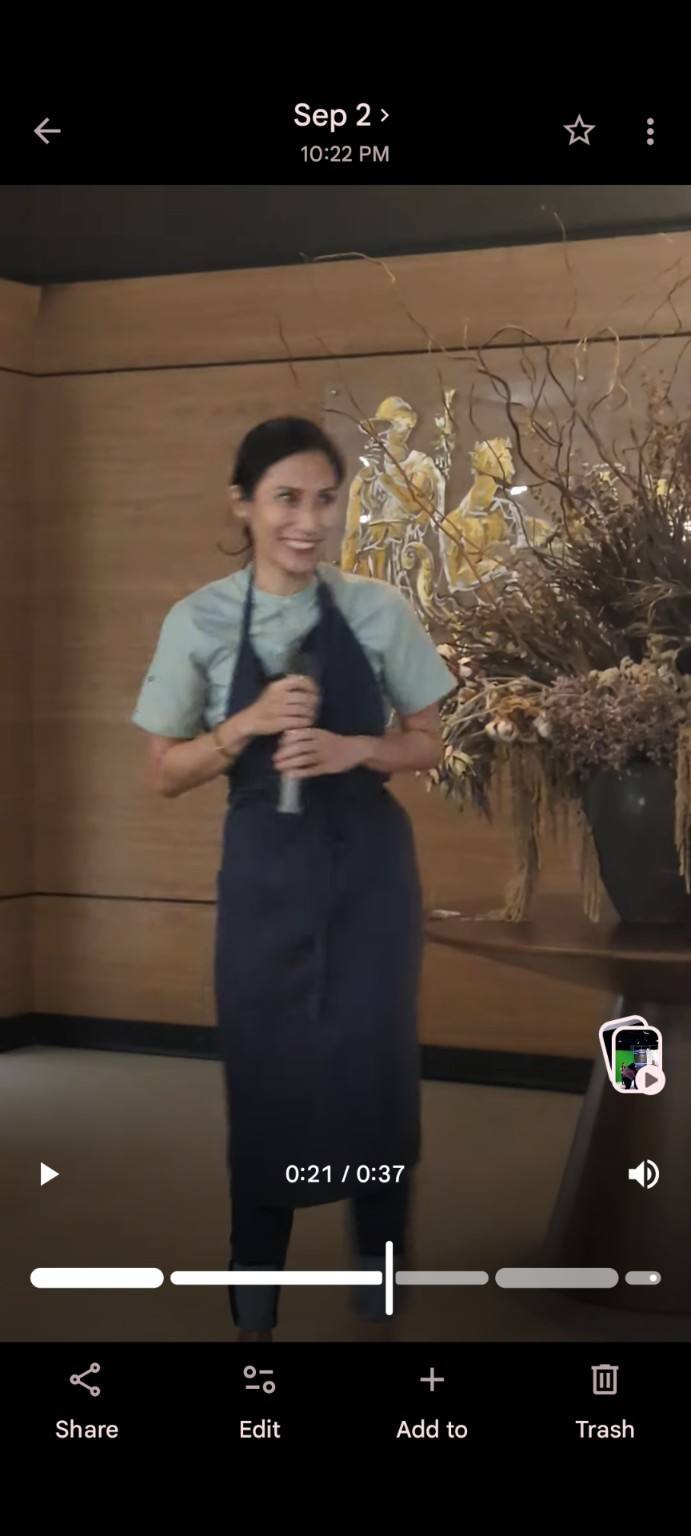
This was supposed to be an interview. I had questions for Chef Rhea Rizzo. We also had thirty-five minutes. Before I asked her to explain what she had made, though, I needed her to know what it had already done to me.
The questions could wait. She should know this now. So I gave the chef a live Google review.
In practice, it felt closer to receiving an old Friendster testimonial — back when the internet was smaller, stranger, and less optimized: someone simply telling you, in full sentences, what you had done for them.
Common Ground was a four-hands culinary experience with curated wine pairings, held at Dominion Cellar, 38 Jupiter St., Makati City, on September 2, 2026. What follows is an abridged clean-verbatim transcript of a call with one of the two chefs behind that dinner, tightened for repetition and Zoom glitches. Dish names are standardized against the Common Ground menu.
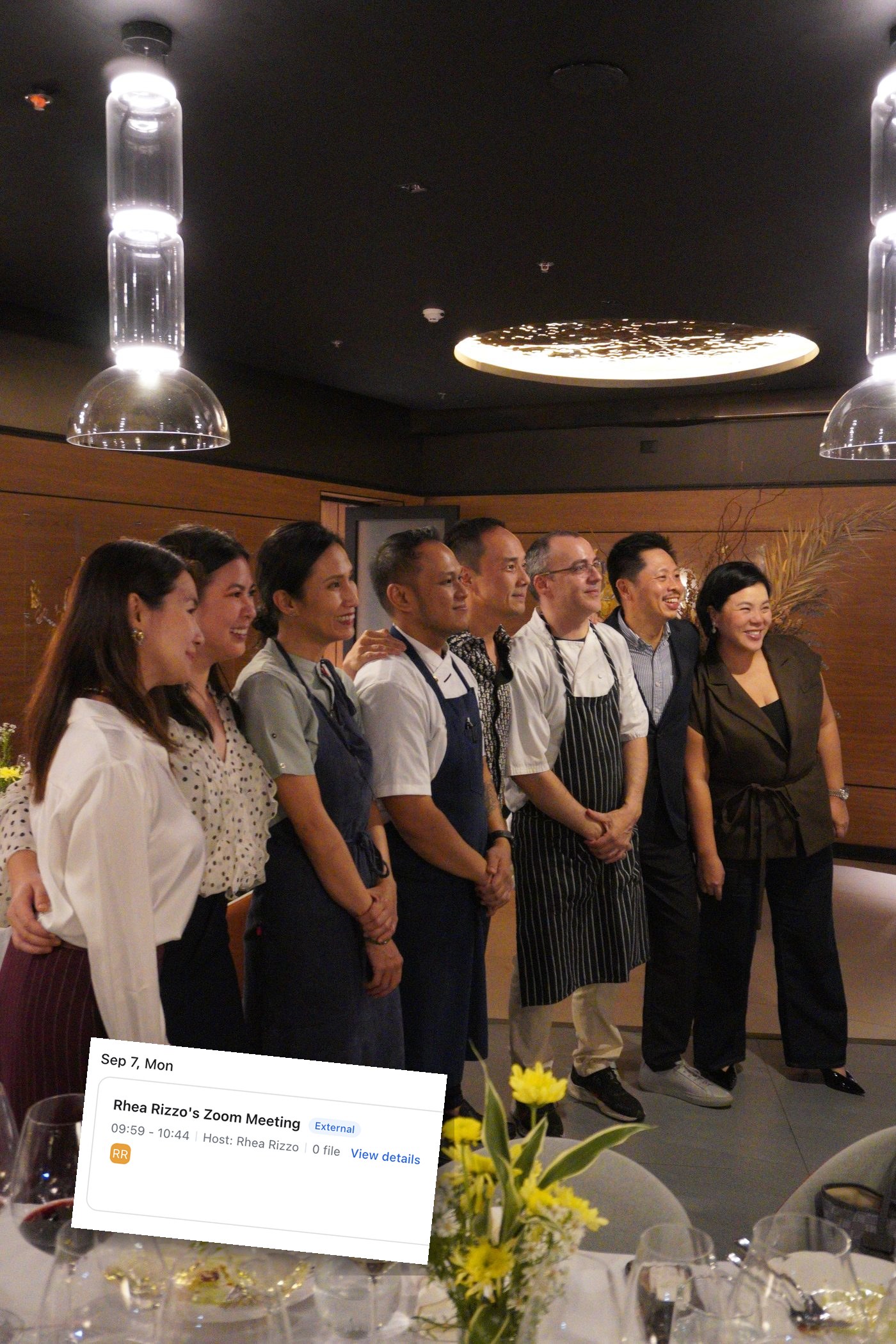
Photo courtesy of Dominion Cellar.
We never really spoke that night. What passed between us was an incoherent sound of satisfaction, a thank you, and “I’ll message you.” The rest of the conversation happened across the table, metaphysically, on the plate.
The premise
A Google review meets the spirit of an old Friendster testimonial: I read the review to the person who made the experience possible — and record what happens next.
The transcript
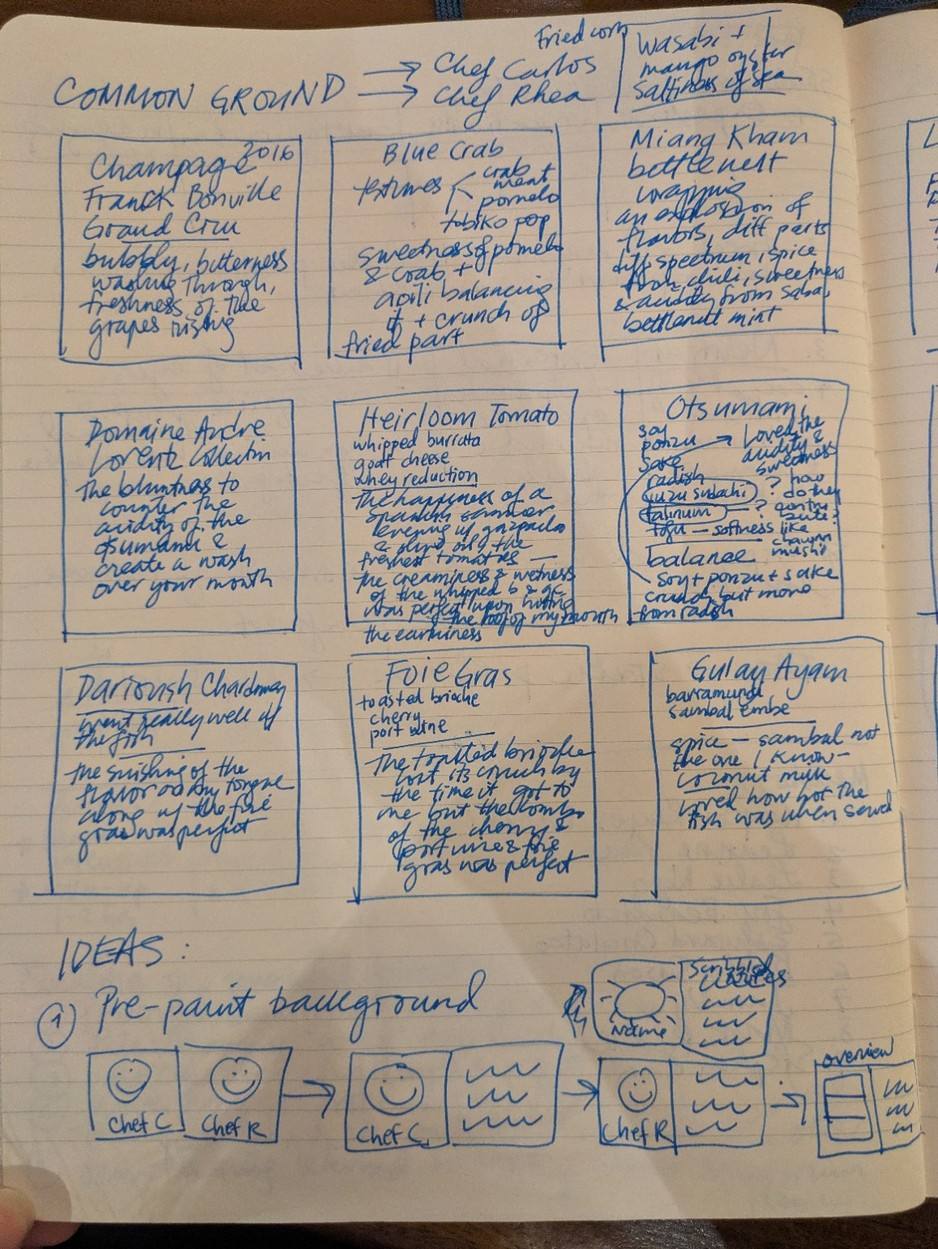
Before the questions, the reason.
Paulina
I wanted to say thank you first for such a wonderful experience. I don’t want to take all of your time, so maybe I can walk you through what the experience was for me.
My students are college students, and sometimes the frustration is: I ask them to bring their blue books after a lecture, then I ask, “How did you feel?” I asked them to bring a journal para walang mag-ChatGPT, and they ChatGPT the question: “How are you feeling?”
I didn’t ask them to summarize. It was: how did you feel about what happened? That’s one of the reasons why I ended up really advocating for the preciousness of humanity in the age of artificial intelligence. I’m seeing it with college students; I’m seeing it with younger kids. I’m a special ed teacher, and I just happen to be a food writer. So it all intersects.
The reason I’m telling you that is because I want to tell you what your cooking does in preserving the intangible heritage that we have — the intangibles of culture that we have.
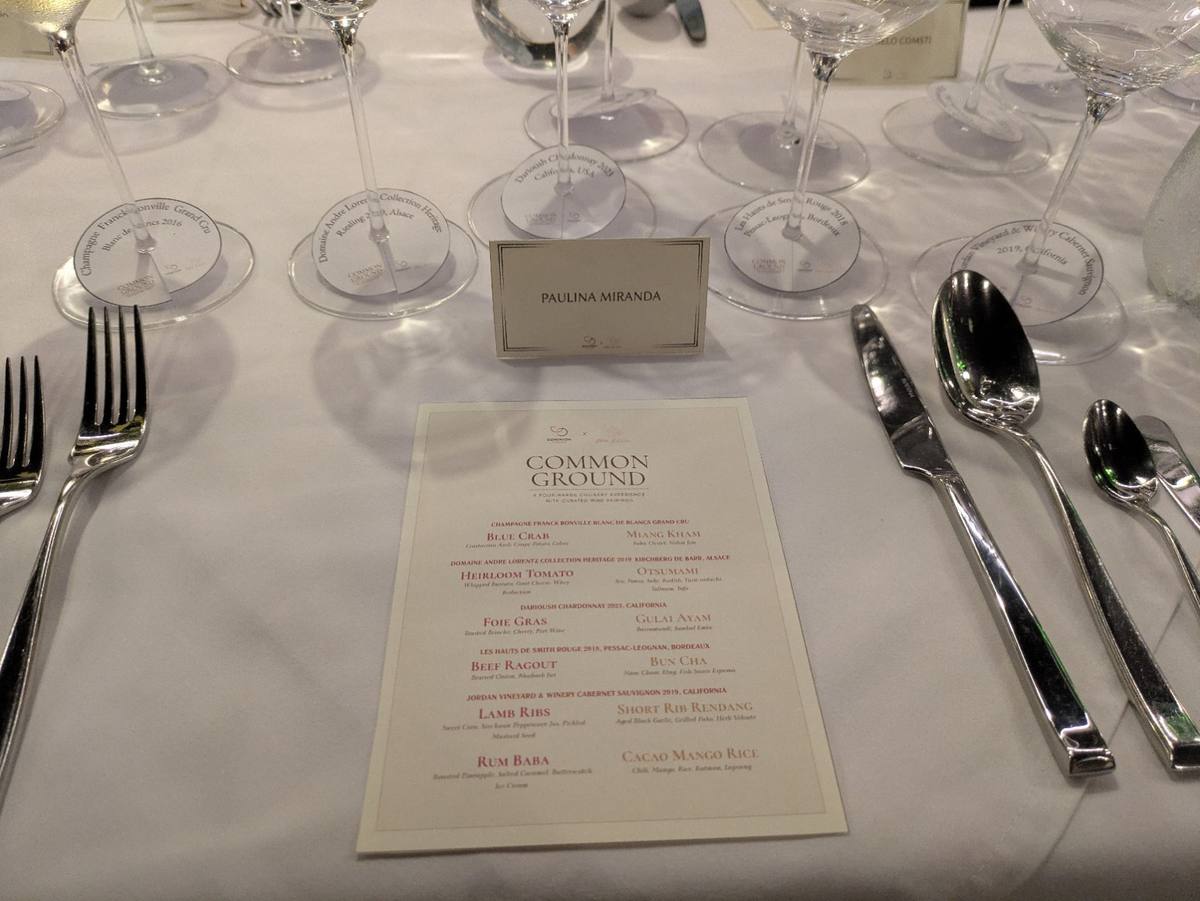
As the dinner went on, I realized I needed the wine as a compass. For a four-hands collaboration, it was strange how often I got lost in food that, at least on paper, should have felt familiar because I’m Filipino. Somewhere around the Bun Cha, I realized that knowing an ingredient is not the same as knowing where somebody else intends to take it.
Towards the end of the dinner, you mentioned that you intended the dishes to give us a tour of Asia through the palate. I laughed at myself, realizing that neither my birth certificate nor my passport could save me from being a tourist in my own continent. My childhood had not issued me a visa for the whole continent.
Field legend — the six Asian-half courses of the collaboration. The European half has yet to be written about.
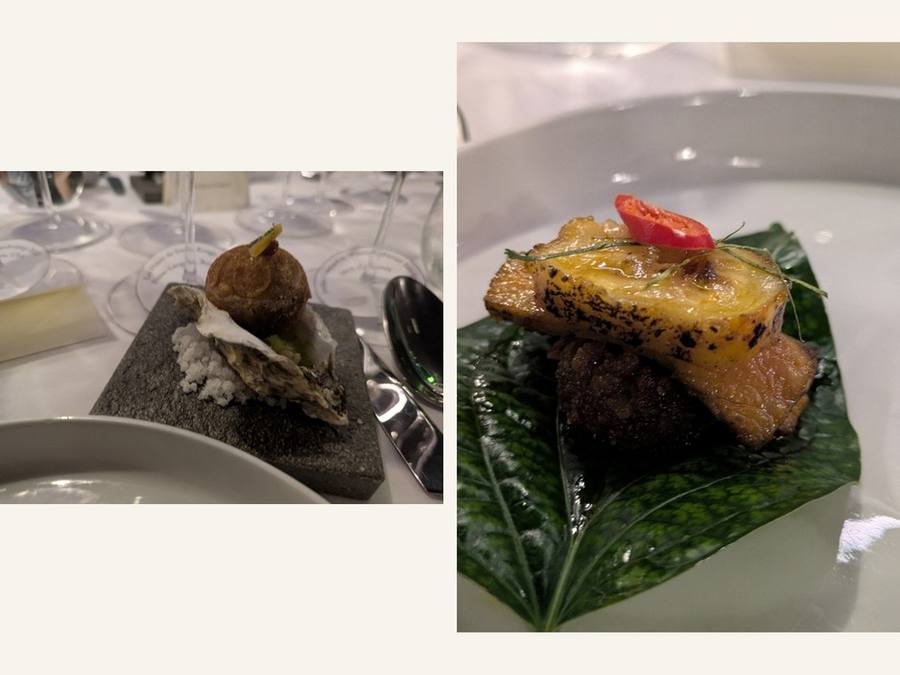
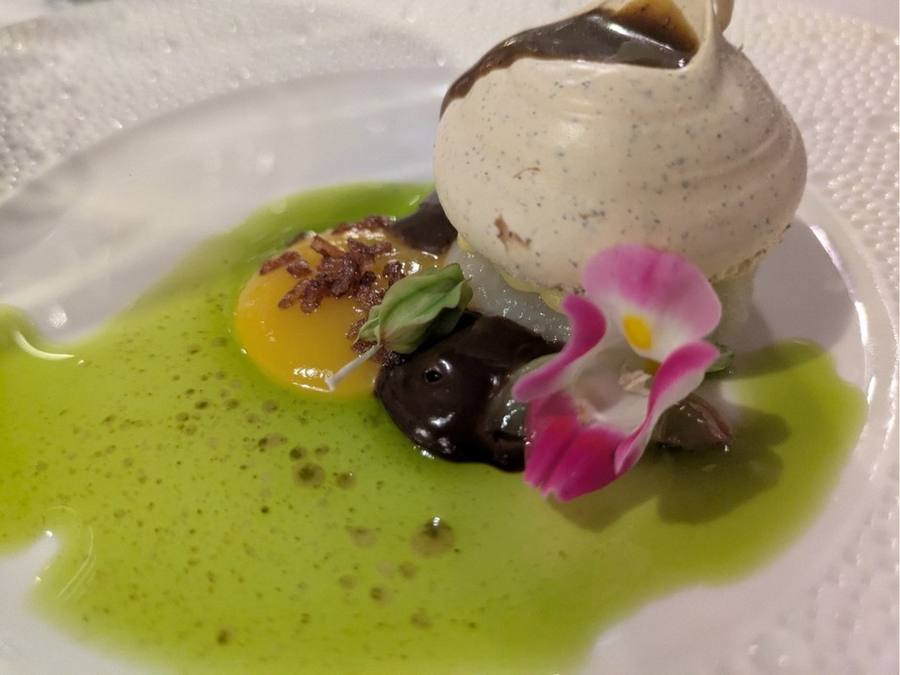
1Miang Kham
Saba · Oyster · Nam Jim
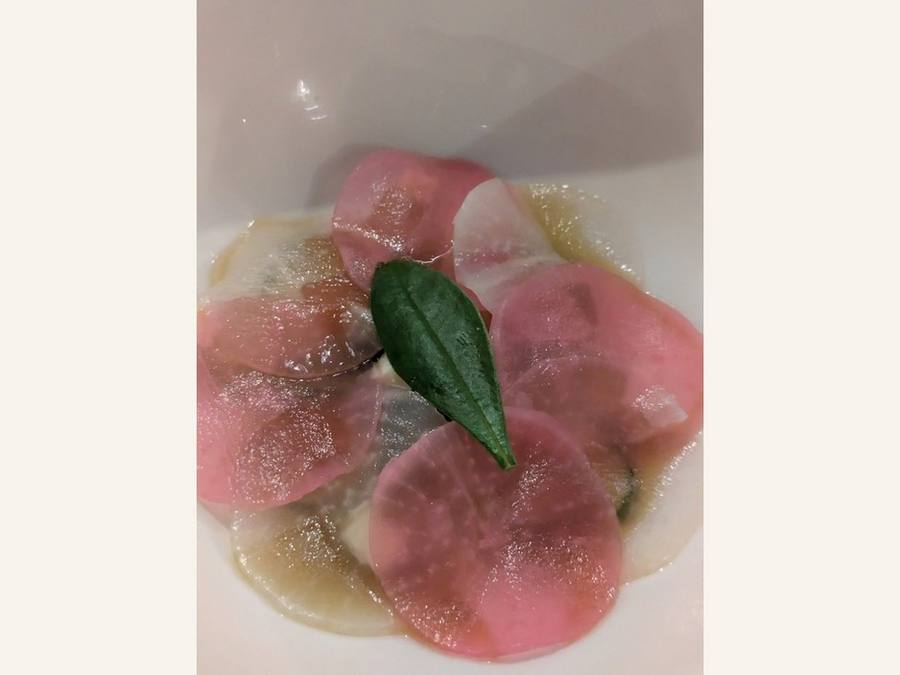
2Otsumami
Soy · Ponzu · Sake · Radish · Yuzu-Sudachi · Talinum · Tofu
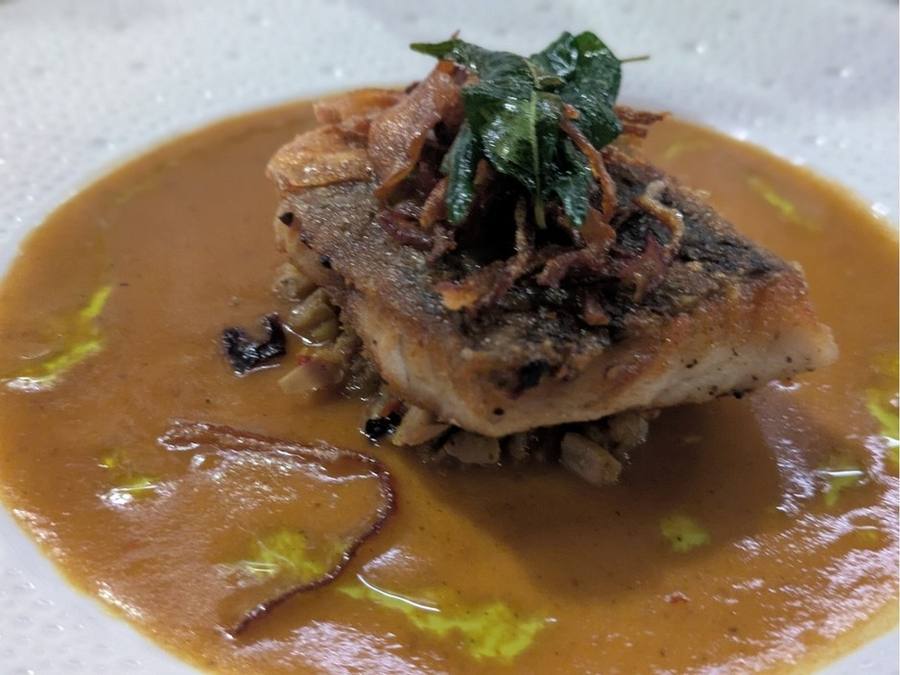
3Gulai Ayam
Barramundi · Sambal Embe
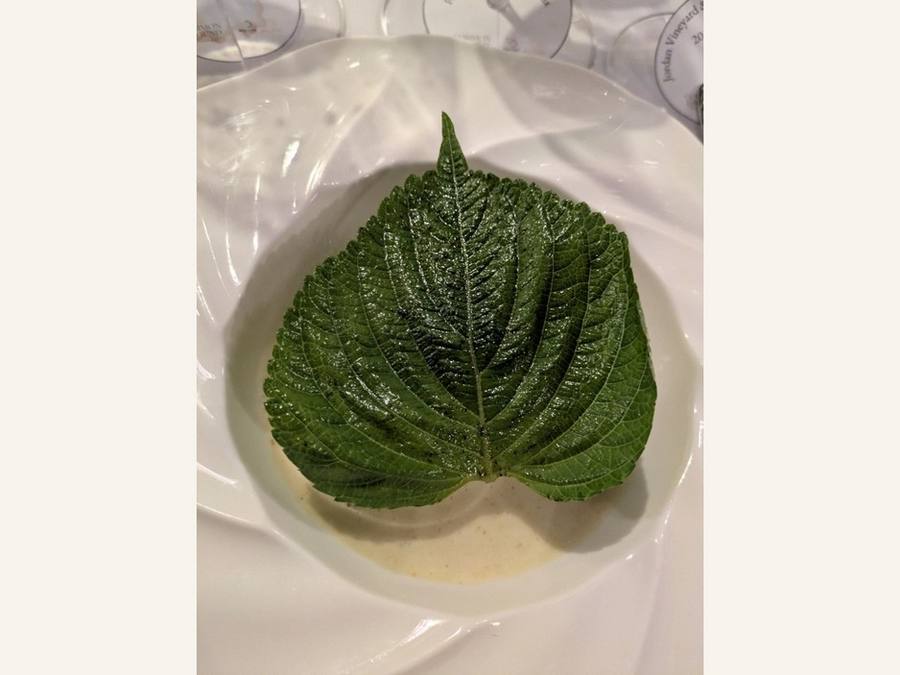
4Bun Cha
Nuoc Cham · Etag · Fish Sauce Espuma
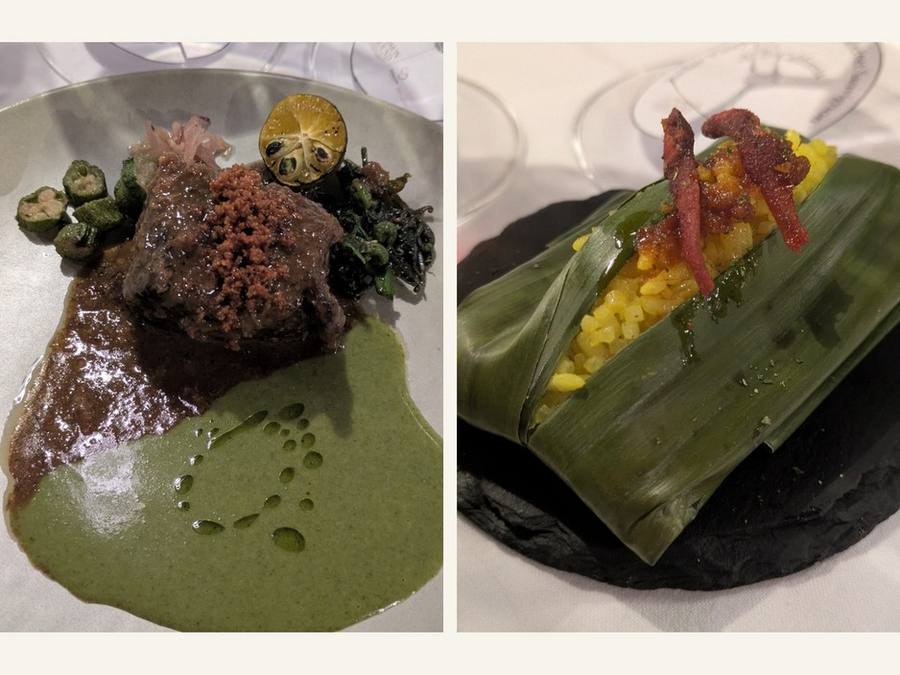
5Short Rib Rendang
Aged Black Garlic · Grilled Pako · Herb Veloute
6Cacao Mango Rice
Chili · Mango · Rice · Katmon · Lapsang
The review, delivered live
Paulina
With the Miang Kham, I kept thinking about the spice from chili, the sweetness and acidity from the saba, and the mintiness of the leaf. I’m just thinking about how all that goes together to begin the meal.
Then for the Otsumami, by then a lot of us agreed: “Oh my God, I can eat this forever.” I loved the acidity and sweetness, the softness of the tofu — almost like chawanmushi — and then the crunch from the radish.
Then your Gulai Ayam. Oh my God. The spice. I love sambal, but I was just like, “But it’s not the one I know.” Then I looked it up and I was like, “Oh my God, how many variations are there?”
Rhea Rizzo
A lot.
Paulina
I also wrote down how much I loved how hot the fish was when it was served. That mattered.
By the time I got to the Bun Cha, the nuoc cham, the etag, the fish sauce espuma — this was interesting for all of us at the table. I really liked the espuma. And the leaf was necessary to cut through the nuoc cham.
Then the Short Rib Rendang: aged black garlic, grilled pako, herb veloute. All these textures and flavors. It was like: hello, guess what? This is Southeast Asia.
And then the Cacao Mango Rice. You think you know what you’re having because mango sticky rice is familiar. You remember Philippine summers. Then suddenly it’s: “Wait, what? What is this?” And again, I’m rediscovering who I am as an Asian.
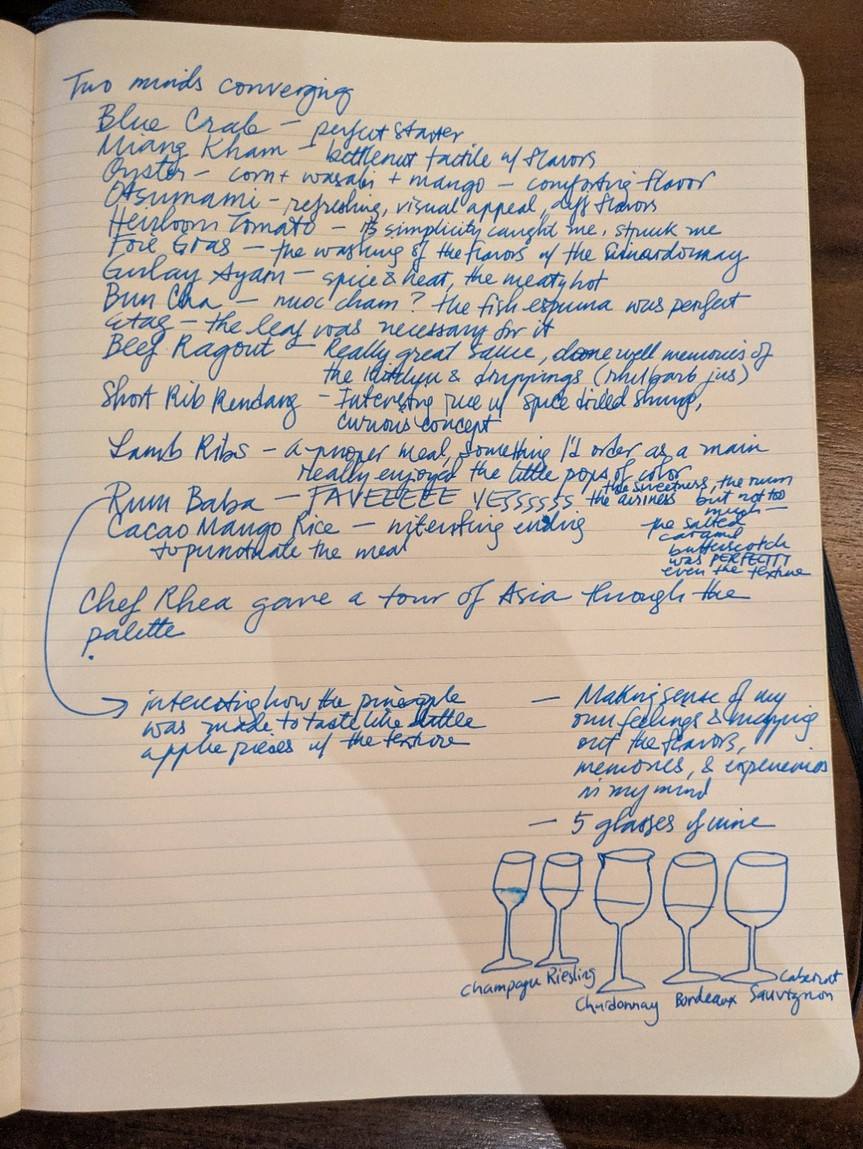
You become a wanderer. You see things anew in your own country, in your own continent that you thought you had already known.
You challenge us to get to know what we think we already knew, using these ingredients, the memories you’ve had, the experiences you’ve had, to tell us stories of who we are.
“I’m getting goosebumps.”
Rhea Rizzo
“I’m getting goosebumps.”
The map becomes something that can be tasted.
Paulina
It’s just so beautiful because in the age of artificial intelligence, where students will be Googling their feelings and asking AI to write their meanings, here you were making me think about how I feel — and making me feel what I feel, not just intellectually. You’re rearranging, rewiring the maps of my mind as to what being Asian is, what being Filipino is, what hospitality is.
That’s why Common Ground felt deeper than an East-and-West collaboration. It is finding the maps of our childhood and having them grow, because you understand that what you think you know, you don’t know — someone new will share something different with you from their world.
If geography were someone’s hated subject, you’re their favorite teacher. Because you made the map something that can be tasted. Something that can be real.
In education, there’s the Zone of Proximal Development. To introduce something new, you activate prior knowledge: find what your students already know, then build on it. With the Cacao Mango Rice, what we know is mango sticky rice. Then you add other ingredients, and it lets the brain form new connections. So for me, the experience was not merely, “Masarap.” Although masarap yung pagkain. It was way deeper than that.
[At this point, I have still not asked Chef Rhea a question.]
Rhea Rizzo
No, I love it. I love it. And thank you for being vulnerable, for providing me the context, because sometimes when we create, we don’t know how it lands on the guest, right?
I think our mission as chefs is to paint our journeys, our memories, in the best way that we can. We want our memories to be tangible, and that’s what we try to put on a plate.
Once the output is done, we don’t know how it lands on our guest. And the fact that I’m hearing this from you for the first time — I’m getting goosebumps, and at so many points when you were sharing your thoughts, I was getting emotional because, “Oh my God, somebody actually gets it.”
I’m grateful for that because we can always create. And I feel like sometimes creatives are the bravest people on earth because that’s what we’re putting out, and that opens us up for a lot of criticism. Maybe good or bad, but this is who we are as a creative, and this is my memory, this is my journey.
The brief was Asia, with the other chef on Europe. But to your point, I didn’t want to give a generic Asia — the brief left room for me to show Asia through my own lens.
The arrival
The emotions that I wanted you to feel, you felt. And for me, that’s the biggest accomplishment.— Rhea Rizzo
Rhea Rizzo
We get questions to explain how we did what, the technicality, who did what, what was the inspiration — all of that. But to actually hear it from somebody else… I didn’t have to say anything.
Yes, it can be masarap. I think that’s the whole point — it has to be masarap. But it’s the emotions that I’m always trying to capture, more than the flavors, more than the textures. I really want you to feel the moment I was conceiving the dish, the feelings, those emotions, when I was having that particular dish somewhere in Asia.
Paulina
I also wanted you to hear this as a live thing. Normally the piece runs later and you read it in the magazine. I wanted you to hear it live, so you’d know that you’re being celebrated, not just in words, but in feeling and in gratefulness for what you bring in the age of artificial intelligence.
Rhea Rizzo
Thank you. Thank you for thinking of me. Thank you for this moment, for this interview — but at the same time, it’s not, because I am hearing it for the first time and it means a lot. It really does mean a lot. And for saying it as it is. I’m for it.
“Thank you for writing.
Thank you for remembering.”
The questions I failed to ask could be answered later. The point of this conversation was that she heard the review first.